•
Strategy & growth
•
20 mins
Measuring Sales Agency Performance Results Beyond Vanity Metrics
Discover the specific metrics and frameworks that reveal your sales agency's true impact on revenue growth and client acquisition.
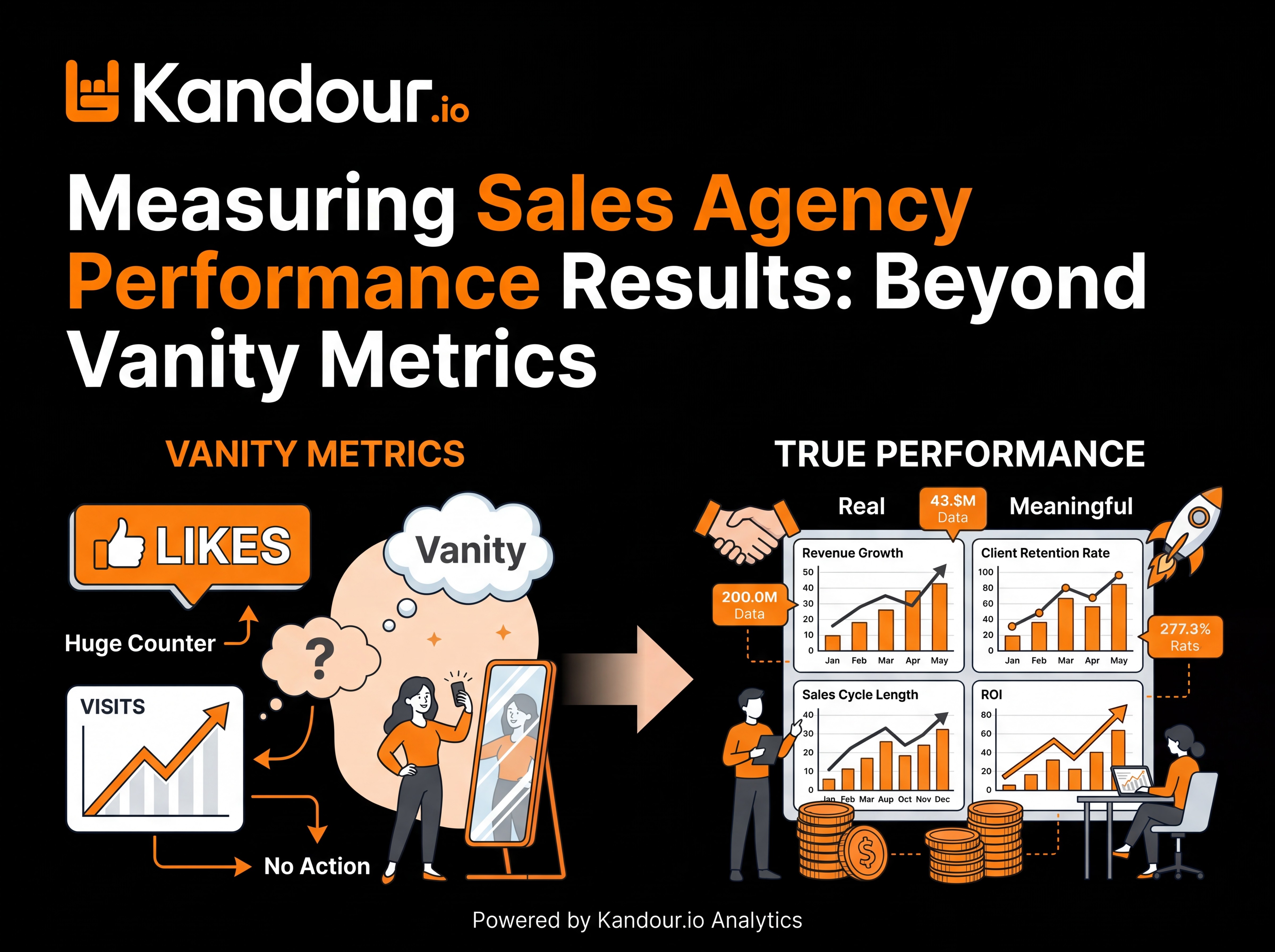
Most marketing directors waste thousands on agencies that report impressive-sounding numbers while their actual sales pipeline remains stagnant. The problem isn't necessarily poor agency performance, it's measuring the wrong things.
According to Salesforce's State of Sales report, 79% of business buyers say it's critical to interact with a salesperson who is a trusted advisor, not just a vendor. Yet many agencies focus on surface-level metrics that don't translate to trusted relationships or revenue growth. When measuring sales agency performance results, smart business owners look beyond likes, clicks, and impressions to track metrics that directly correlate with their bottom line. This approach reveals which agencies truly understand your sales process and which ones are simply good at generating pretty reports.
Revenue Attribution Models
The most reliable way to measure sales agency impact starts with establishing clear revenue attribution.
We implement multi-touch attribution models that track every interaction from initial awareness through to closed deals. This means tagging all agency-generated leads with specific campaign codes and following them through your entire sales funnel. First-touch attribution shows which agency activities generate initial interest, while last-touch reveals what finally converts prospects into customers. However, the most accurate picture emerges from time-decay attribution models that weight recent interactions more heavily while still crediting earlier touchpoints. At Kandour, we've found that agencies delivering genuine value typically show measurable pipeline contribution within 90 days. Tools like HubSpot's revenue attribution reports or Salesforce's campaign influence tracking make this process manageable. The key is ensuring your agency understands they'll be measured on actual revenue contribution, not just lead quantity. This shifts their focus from generating maximum volume to attracting prospects who actually match your ideal customer profile and have genuine buying intent.
Pipeline Velocity Metrics
Pipeline velocity measures how quickly prospects move through your sales stages, revealing whether your agency attracts ready-to-buy customers or unqualified browsers.
Calculate this by tracking the average time between initial contact and closed deal for agency-sourced leads compared to other channels. Quality agencies should either maintain your existing velocity or improve it, as their targeting and qualification processes should identify prospects with genuine buying intent. We track four velocity components: number of opportunities, average deal size, win rate, and sales cycle length. When all four metrics improve simultaneously, it indicates your agency understands your market deeply. However, if lead volume increases but velocity decreases, the agency may be casting too wide a net. Gong's conversation analytics can help identify whether agency-generated leads ask better questions or show stronger buying signals during initial sales calls. The most effective agencies we work with produce leads that convert 23% faster than organic inquiries because they've invested time understanding our clients' value propositions and ideal customer challenges. Monitor these velocity changes monthly, and expect meaningful improvements within the first quarter of engagement. Agencies that can't demonstrate positive velocity impact after 120 days likely lack the strategic depth your business needs.
Customer Lifetime Value Analysis
Measuring how to measure sales agency impact beyond vanity metrics requires examining the long-term value of acquired customers, not just immediate conversions.
Calculate the average customer lifetime value (CLV) for agency-sourced clients versus other acquisition channels. Superior agencies attract customers who stay longer, buy more frequently, and refer others to your business. Track retention rates, expansion revenue, and referral generation for each customer segment your agency targets. We've observed that agencies focusing on relationship-building rather than hard-selling techniques typically deliver customers with 28% higher lifetime values. This happens because they attract prospects who genuinely align with your service offering rather than those swayed by aggressive tactics. Use your CRM to segment customers by acquisition source and monitor their behaviour patterns over 12-24 months. Quality indicators include lower churn rates, higher upsell acceptance, and increased referral activity. Some agencies excel at attracting high-value customers who become brand advocates, while others generate quick wins that fade rapidly. Platforms like ChurnZero or Gainsight can help track these longer-term patterns. The most valuable agency partnerships we've developed focus on customer quality over quantity, understanding that sustainable growth comes from serving the right clients exceptionally well rather than serving everyone adequately.
Sales Team Productivity Impact
The best agencies don't just generate leads, they improve your entire sales operation's effectiveness.
Monitor whether your sales team's productivity increases when working with agency-generated prospects. Track metrics like calls-to-meeting ratios, presentation-to-proposal conversions, and overall quota attainment across your sales team. Quality agencies provide better lead intelligence, more detailed prospect research, and clearer buying signals that help salespeople have more productive conversations. We measure sales team confidence through regular feedback sessions and conversion rate tracking. Teams working with high-quality agency leads typically report feeling more prepared for sales calls and experience less rejection during outreach activities. Your agency should also provide detailed lead handoff documentation including prospect pain points, budget indicators, and decision-making timelines. This intelligence enables more targeted sales conversations and shorter qualification periods. Monitor your sales team's activity metrics before and after agency engagement. Improvements in meeting acceptance rates, proposal win rates, and average deal sizes indicate your agency understands the sales process deeply.
At Kandour, our approach combines candour with kindness, ensuring that both prospects and sales teams have positive experiences. The most effective partnerships show measurable improvements in sales team morale alongside conversion metrics, as quality leads make everyone's job more enjoyable and successful. Moving beyond vanity metrics requires commitment to tracking what truly matters for your business growth. Focus on revenue attribution, pipeline velocity, customer lifetime value, and sales team productivity to evaluate agency performance accurately. These metrics reveal whether your agency investment generates sustainable growth or temporary activity spikes. When agencies know they'll be measured on business impact rather than surface-level engagement, they naturally align their strategies with your revenue goals.
Ready to implement these measurement frameworks with your current or potential sales agency partners? Let's discuss how to establish proper tracking systems and performance benchmarks that ensure your agency investment delivers measurable results. Book a strategic consultation to review your current metrics and design a performance measurement system that drives real growth.

Founder & CEO
Sebastian Thorpe
At Kandour, I combine kindness and candour to give honest feedback in a thoughtful way. Empowering business owners and leaders who prefer sales to feel natural, not forced.
If you're a founder or small team ready to simplify your sales, let's schedule a short call and uncover a way to help your business grow.
Remember. You don’t need to be a salesperson to sell brilliantly. You just need the right guidance and a style that feels like you.
Written By